Precision Thin-Film
Deposition Platform
Primary application: Nanosolar Tile — transparent perovskite solar film for building-integrated photovoltaics
controlled gap and programmable
stroke velocity per ink
channel count expands with application
A Purpose-Built Deposition System
Developed in-house at HTS Resources, the Rister platform is the first automated coating system to integrate ink aspiration, doctor blade deposition, inter-layer cleaning, and in-situ film inspection in a single uninterrupted workflow — driven by a novel dual-function pipette tool that handles both fluid delivery and blade actuation through the same nozzle array. Fluidic control runs on a dedicated microcontroller with multi-channel stepper-driven syringe pumps and pinch valves, fully decoupled from gantry motion control, executing a purpose-built command protocol that specifies volume, flow rate, acceleration ramp, valve mask, and dispense timing independently per channel — enabling precise ink delivery during the coating stroke itself, not just before it. The open Luer Lock nozzle interface accepts interchangeable dispensing orifices across the full viscosity range of functional inks from hole-transport layers through perovskite absorbers. Purpose-built for multi-material thin-film fabrication on flexible substrates at a fraction of the cost of commercial alternatives.
What Makes It Different
- Novel dual-function pipette tool — the same nozzle array that aspirates and delivers ink also couples directly to the doctor blade via nozzle-socket engagement, driving the coating stroke without a separate blade actuator
- Decoupled fluidic control — dedicated microcontroller with multi-channel stepper-driven syringe pumps and pinch valves operates independently of gantry motion, enabling volume, flow rate, valve mask, and dispense timing to be programmed per channel during the coating stroke
- Open Luer Lock nozzle interface — interchangeable dispensing orifices accommodate the full viscosity range of functional inks; no proprietary tip format required
- Passive blade ejector — doctor blade is released via a programmed XYZ motion sequence against a passive fixture; no additional actuators required
- Automated inter-layer cleaning — the same pipette tool aspirates residual ink, dispenses wash solvent, and aspirates waste between layers without manual intervention
- In-situ camera inspection and bed leveling — fiducial-based referencing and four-corner independent Z-axis leveling maintain coating uniformity across the full substrate area between layers
- Designed for controlled atmosphere operation — compatible with N₂ glovebox and inert environment requirements for air-sensitive material systems
- Near-zero cost to scale — syringe pumps, valves, and tool bodies fabricated in-house; adding channels means printing more hardware, not purchasing proprietary components
Platform Capabilities
The platform's core capabilities address a broad range of thin-film deposition applications requiring precise, multi-material, multi-layer workflows on flexible substrates.
Adjacent Application Areas
While perovskite BIPV is the current focus, the platform's capabilities apply directly to other thin-film deposition workflows:
Toolchanger Platform
The Rister toolchanger is a purpose-built motion control and dispensing platform running proven open-motion-control firmware. Each tool head is a self-contained dispensing unit with printed syringe pumps and servo-actuated valves — all fabricated in-house. Tool heads support multiple channels (up to 8 demonstrated), and multiple tools can be loaded per run. All mechanical and fluid components are documented in the hardware repository.
Specialized Tool Heads
Liquid Handling Tool
Multichannel pipette tool with open Luer Lock nozzle interface — interchangeable dispensing orifices from 10G to 34G. PTFE tubing (1.5mm ID), stepper-driven syringe pumps, and servo-actuated pinch valves fabricated in-house. Fluidic control runs on a dedicated microcontroller decoupled from gantry motion — volume, flow rate, valve mask, and dispense timing programmable per channel. Nozzles couple directly to the doctor blade tool via receiver socket engagement for automated blade loading and coating stroke actuation.
Doctor Blade Tool
TPU compliant blade edge with controlled gap setting for uniform thin-film deposition. Stage-docked when not in use — loaded and driven by the liquid handling tool via nozzle-socket engagement. Released via passive ejector fixture through programmed XYZ motion sequence; no dedicated blade actuator required.
Camera Inspection Tool
Raspberry Pi 5 with autofocus camera. Real-time QC, fiducial-based absolute referencing, and sub-millimeter positional verification across tool exchanges. Incorporates bed-flatness probe for four-corner independent Z-axis leveling between coating passes.
Video Demonstrations — Doctor Blade Dispensing Sequence
Complete ink aspiration and doctor blade deposition workflow using the liquid handling tool. 18G Luer Lock blunt tip dispensing with TPU doctor blade — mimic ink validation runs.
① Pipettor tool loading
② Ink aspiration
③ Doctor blade loading after aspiration
④ Doctor blade dispensing
⑤ Doctor blade removal
⑥ Pipettor tool docking
Pressure Control System
Fluidic control is handled by a dedicated microcontroller fully decoupled from gantry motion — running a purpose-built command protocol that coordinates multi-channel stepper-driven syringe pumps, pinch valves, and pressure compensation in a single integrated system.
- Decoupled microcontroller — stepper-driven syringe pumps and pinch valves operate on a separate controller from gantry motion, allowing dispense volume, flow rate, acceleration ramp, and valve mask to be commanded independently per channel during any point in the coating workflow
- Per-channel pinch valve control — individual channels opened and closed via bitmask, enabling independent ink routing without cross-contamination between formulations
- Pressure compensation reservoir — liquid level sensor triggers automatic peristaltic refill, maintaining stable hydraulic head across extended multi-layer deposition runs
- Multi-event dispense sequencing — volume divided across timed dispense events (e.g. 3× 10 µL at 500 ms intervals) enables controlled ink delivery during blade travel, not just ahead of it
- Automated cleaning loop — IPA flush, exterior wash, and waste evacuation in a closed-loop process between ink layers
Fluid Management System Diagrams
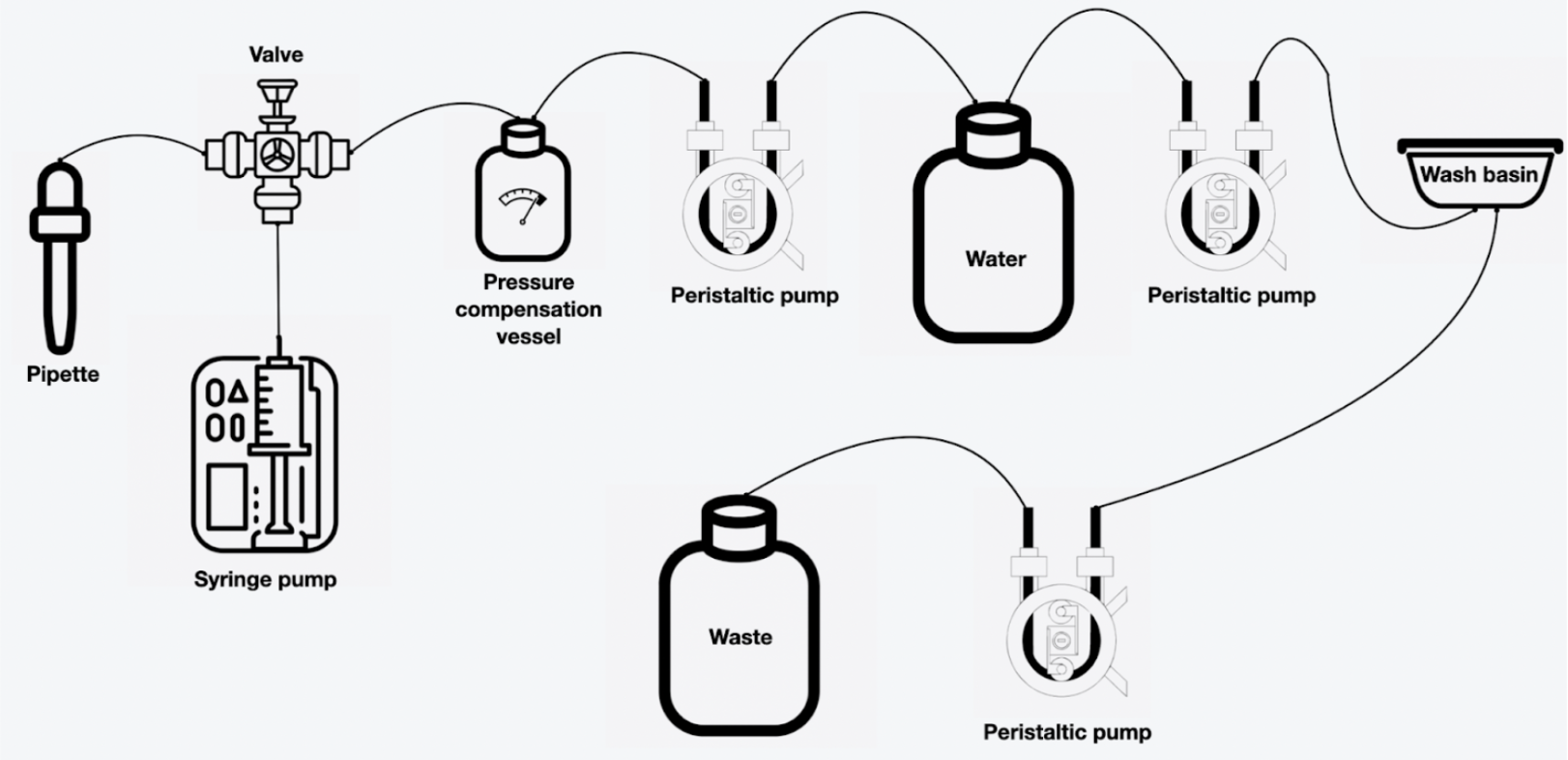
Figure 1 — Single syringe pump: pressure compensation reservoir, 3-way valve positions, and automated cleaning.
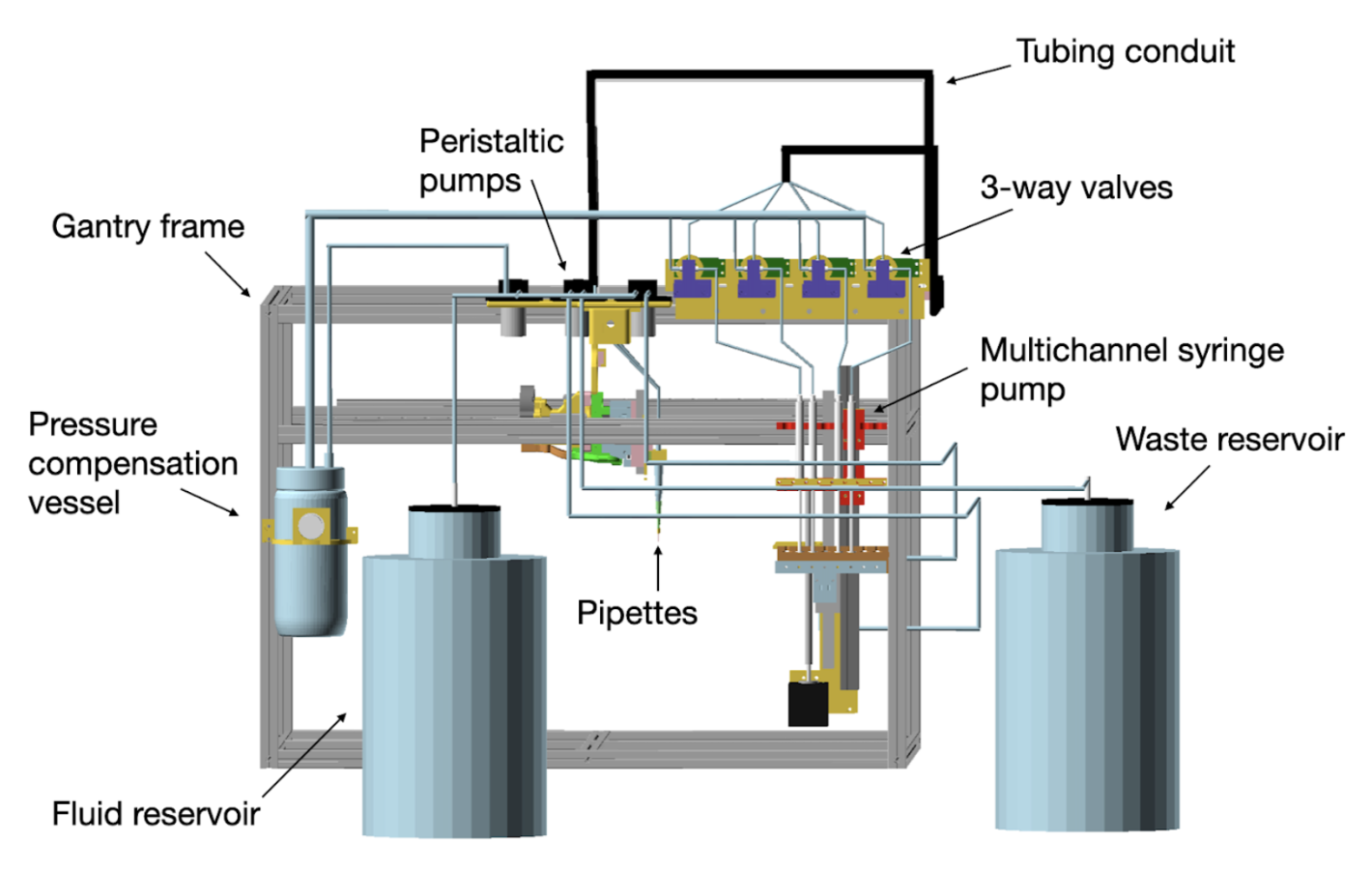
Figure 2 — Multichannel configuration (4 syringes) with valves, gantry frame, peristaltic pumps, and waste/wash stations.
Nanosolar Tile
Nanosolar Tile is the platform's primary development application — a thin, flexible transparent perovskite solar film that turns existing windows and building facades into distributed power generation surfaces.
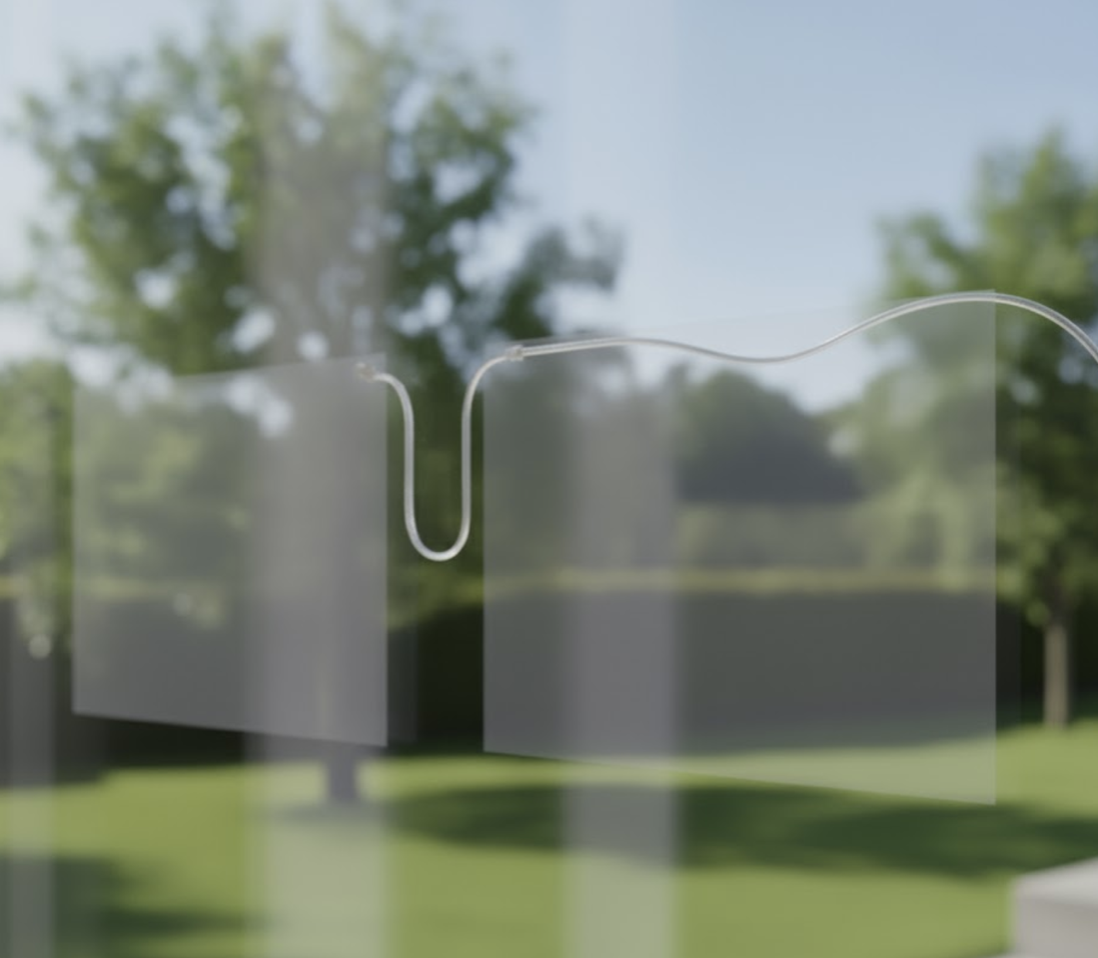
Transparent window-attached perovskite solar film — visible light passes through while sunlight is converted to electricity.
to electricity
passes through
no cleanroom required
cost at scale
Visually indistinguishable from lightly tinted architectural glass. Retrofit-compatible — applies to existing windows without structural modification.
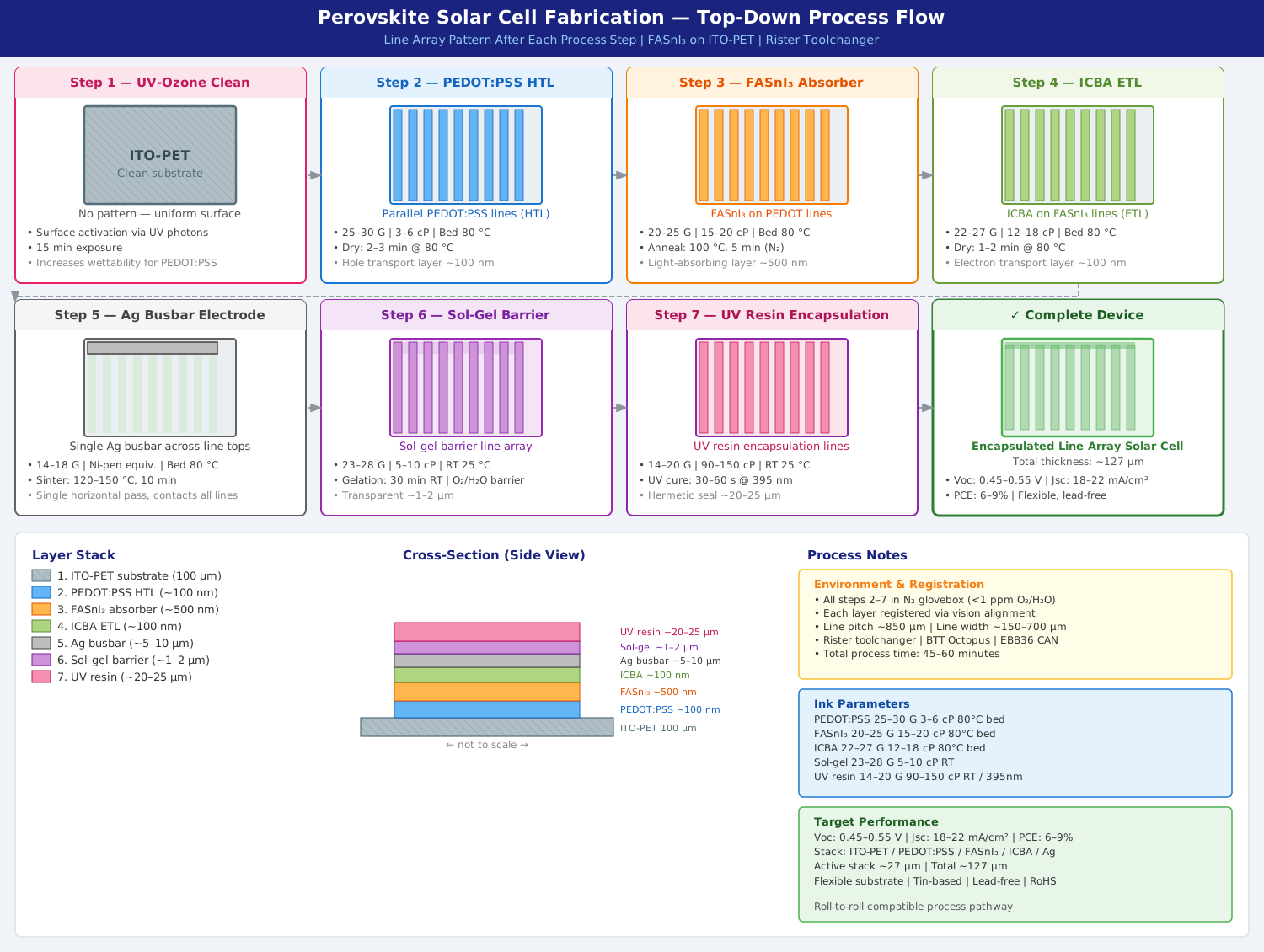
Top-down PV fabrication process flow — substrate preparation through encapsulation on flexible ITO-PET.
Why Perovskite on This Platform
- Doctor blade coating architecture — uniform thin-film deposition achieves consistent layer thickness across the full substrate width
- Ambient-pressure processing — full stack deposited at ≤100°C, eliminating vacuum deposition requirements
- Multi-material in sequence — hole transport, absorber, and electron transport layers deposited in a single substrate-loaded run
The BIPV Opportunity
California's commercial buildings consume over 40% of the state's electricity. Current transparent solar film options are either too expensive to manufacture or require cleanroom infrastructure inaccessible to small developers — creating a gap that the Nanosolar Tile addresses directly.
Low-cost printable perovskite film changes the economics of building-integrated solar — making distributed generation viable on existing commercial glazing at under $15/m².
- Reduces peak demand by generating power at the point of consumption
- Lowers transmission losses through distributed generation on existing building envelopes
- Enables daylighting credits while generating clean energy on-site
- Retrofit-compatible — no structural modification required
Validated Milestones
- Doctor blade coating workflow validated with mimic inks — ink aspiration, nozzle-socket blade coupling, coating stroke, passive ejector release, and blade return all demonstrated
- Multi-channel stepper-driven syringe pumps and pinch valves validated — per-channel volume, flow rate, and valve mask control confirmed
- Multi-material toolchanger validated: full load/unload cycles mid-fabrication without coordinate loss
- Camera fiducial referencing and tool-offset measurement implemented and tested
- Printer Designer integrated end-to-end: layout → dispenser config → G-code → execution
Mimic Ink Validation Approach
All hardware and process development uses rheology-matched proxy inks before transitioning to actual perovskite precursors. Mimic inks (water + xanthan gum at varying concentrations) match the flow characteristics of perovskite precursor inks and can be dispensed with 34G needles at room temperature — enabling full process validation without hazardous material handling.
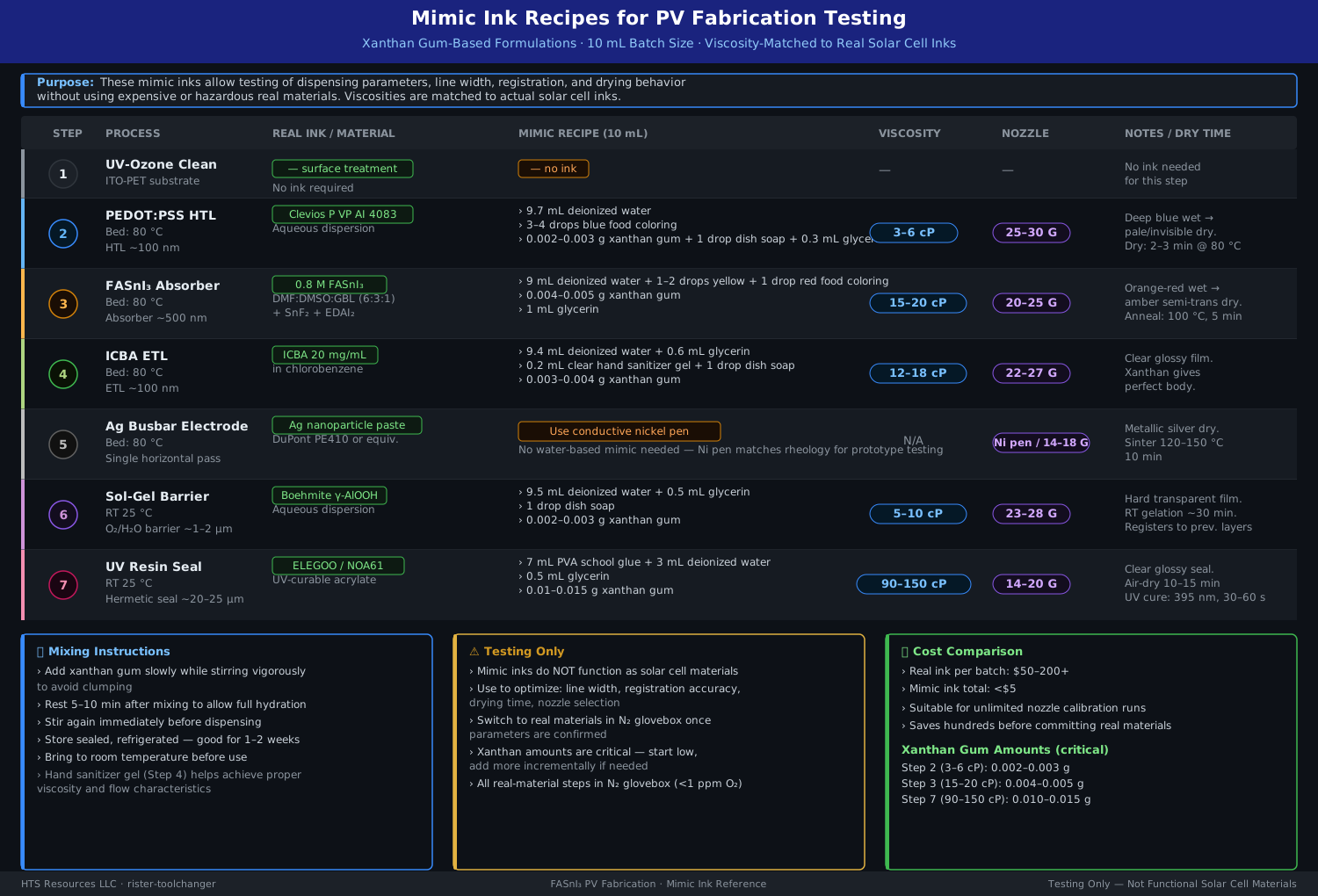
7-Step PV Process Flow
Complete transparent PV fabrication on flexible ITO-PET substrates in a controlled N₂ environment — all steps executed on the Rister platform at ≤100°C:
UV-Ozone Cleaning
ITO-PET surface activation. 185 nm + 254 nm, 12–15 min. Target contact angle: <10°.
PEDOT:PSS Deposition
Hole transport layer. Printed onto activated ITO surface. Anneal 120°C / 20 min.
Perovskite Deposition
FASnI₃ thin-film deposition via automated doctor blade coating. N₂ atmosphere, controlled blade gap and stroke velocity. Anneal 100°C / 10 min.
Electron Transport Layer
PCBM / SnO₂ deposition for charge extraction.
Electrode Formation
Silver nanowire or carbon-based top contact deposition.
Barrier Coating
UV-crosslinked encapsulant protecting perovskite from moisture and oxygen.
Encapsulation
Final lamination for mechanical and environmental protection.
Get Involved
Seeking lab partnerships, accelerator programs, and early-stage investors aligned with advanced manufacturing, thin-film materials, and California energy goals. Also open to conversations with research institutions interested in applying the platform to new materials applications.